My Simple Korean Fashion That Saves Me Time (and Still Looks Alright)
Here's the thing nobody tells you about minimalist style: it's not really about owning less stuff. It's about refusing to spend your limited mental energy on something that doesn't matter to you. For me, that's clothes. I'd rather make that decision once, well, and then never think about it again.
What "Simple" Actually Means to Me
I'm not into looking sloppy, and I'm not into looking like I tried too hard either. I want clean, put-together, a little feminine — but never fussy. If I have to think about an outfit for more than thirty seconds, something's wrong with the outfit, not my morning.
A few hard rules I've landed on over the years:
- No pants that need adjusting all day (you know the ones)
- Nothing that rides up or flashes my midriff the second I move
- Nothing oversized enough to get in my way
- Nothing that needs ironing — life's too short
- And the biggest one: if it's uncomfortable, it doesn't matter how good it looks on the hanger. It's gone.
That last rule alone cut my closet down by more than half.
Home Clothes vs. Going-Out Clothes: Two Completely Different Rules
I split my wardrobe into two categories, and I treat them very differently.
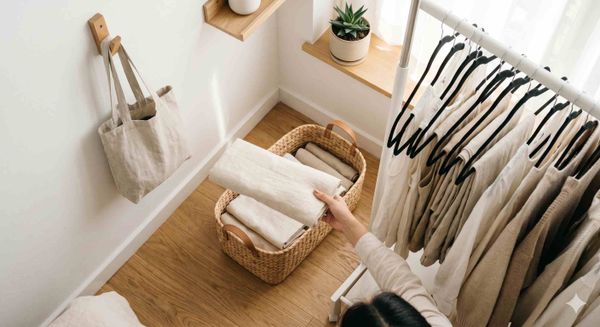
At home, it's 100% cotton. Uniqlo, MUJI — soft, breathable, nothing that feels like "real clothes." This is where comfort wins every single time, no styling involved.
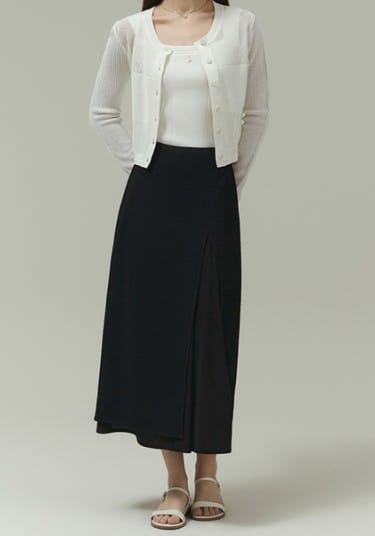
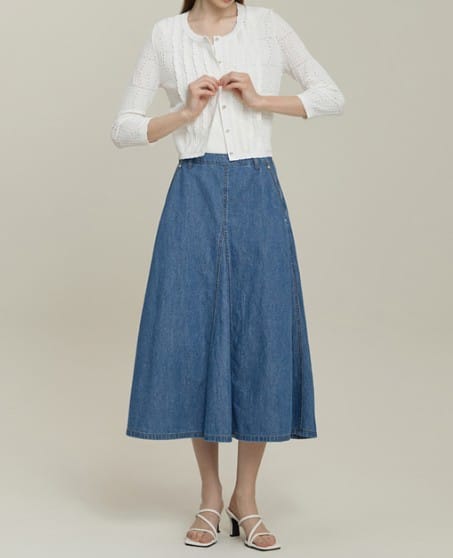
Going out, I've narrowed it down to basically one brand: a Korean label called IT MICHAA (잇미샤). It fits my body shape well, the fabric holds up, and it's comfortable enough that I'm not adjusting myself all day. I buy almost everything from their outlet stores, usually $100–$200 per piece. That's not cheap, but here's the math that makes it worth it to me: I only shop there once or twice a year, usually when I'm back in Korea, and the outlet manager already knows my fit and pulls pieces for me. I'm not browsing five stores anymore. I walk in, try on what she's set aside, and I'm done. The cost per piece is higher, but the cost in time and decision fatigue is less.
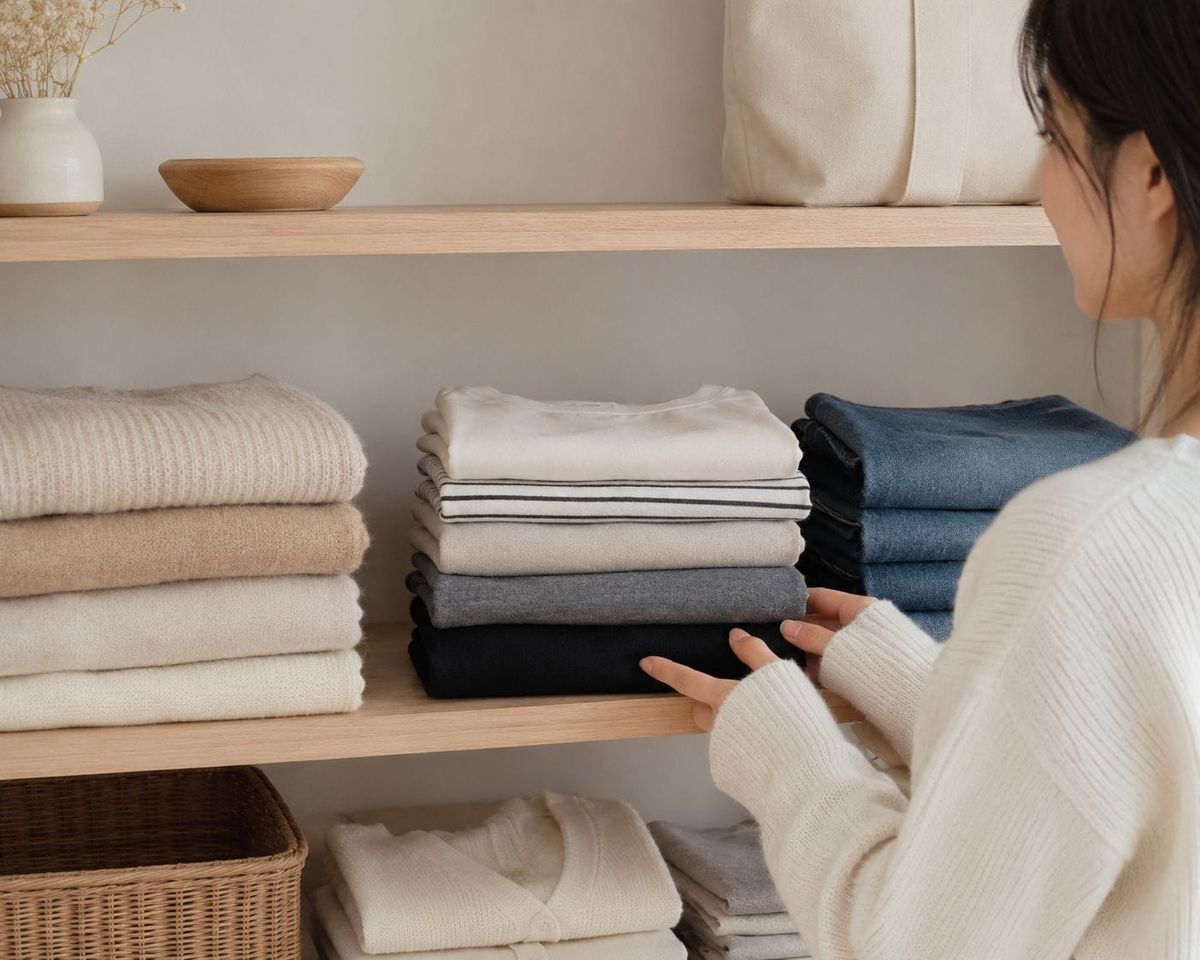
Outside of that one brand, I round things out with Uniqlo and MUJI basics in better fabrics — the cotton, wool, cashmere, and rayon pieces specifically. Natural fibers feel better against skin, hold their shape on my body, and (small but real bonus) don't build up static the way synthetics do.
The Trade-Offs Nobody Mentions
This system isn't flawless, and I want to be honest about that.
- Limited variety means limited "fun." If you genuinely enjoy experimenting with fashion, this approach will feel restrictive, even boring. I don't experiment with clothes — I get my novelty elsewhere.
- You're dependent on one brand fitting you. If Itmicha changed their cuts tomorrow, or stopped restocking the pieces I rely on, I'd have to rebuild my whole going-out wardrobe from scratch. That's a real risk of narrowing down this hard.
- It only works if you actually know your body. I didn't land on these rules overnight — it took years of buying the wrong things to figure out what I'll actually wear repeatedly versus what just looked good in a fitting room.
- It's not the cheapest option upfront. $100–$200 per piece adds up fast if you're buying often. This only makes financial sense because I buy rarely and everything gets worn into the ground.
Who This Approach Is For (and Who It's Not)
This works well for people who'd rather make fewer, more deliberate choices than enjoy frequent shopping as a hobby. If decision fatigue is real for you — if "what do I wear" is a daily source of low-grade stress — cutting your options down on purpose is genuinely freeing.
It's probably not for you if you see clothing as a creative outlet, if you like having a big rotation for variety, or if you're someone who enjoys the process of shopping itself. There's