The No-Fold Laundry System: How to Simplify Your Wardrobe and Save Hours
I used to spend evenings folding laundry while half-watching something on Netflix. It felt productive. It looked productive. But eventually I did the math: I was spending somewhere between 2-3 hours every single week performing a task whose entire output was... a neat pile that would be dismantled within a day.
That's when I stopped. Not because I'm lazy. Because I genuinely couldn't justify the return.
What followed was quietly testing what actually needed to be folded versus what I'd just been folding out of habit. The system I landed on isn't glamorous. It won't photograph well for a Pinterest board. But it has genuinely changed how I feel about laundry day, and that's the only metric that matters.
Point 1: The Basket System — Towels and Underwear Don't Need to Be Folded
This was the first thing I dropped, and honestly the most liberating.
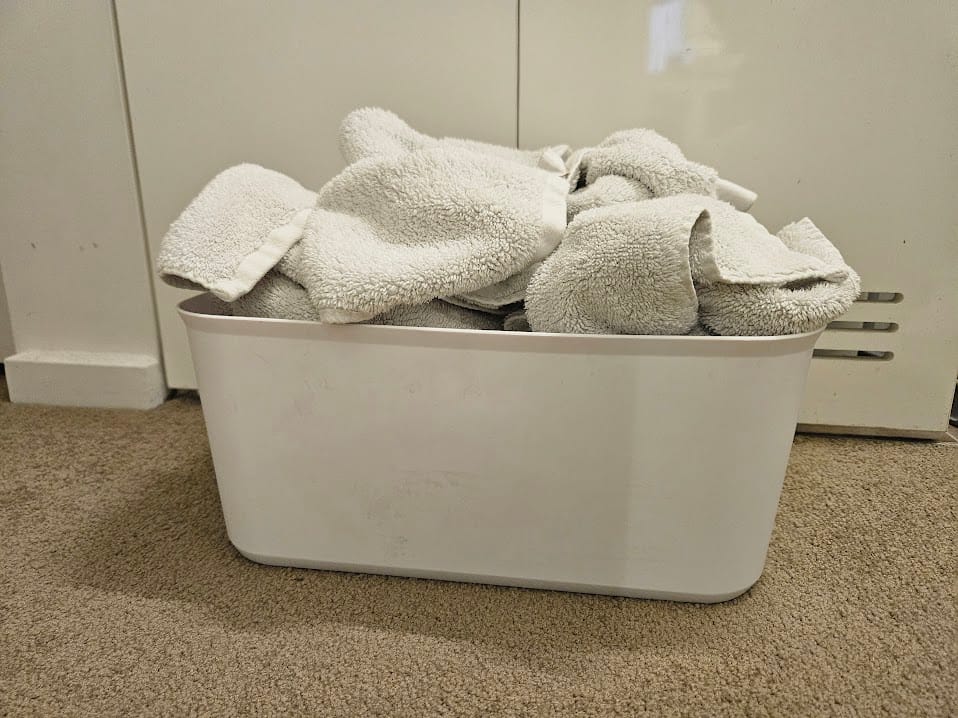
Towels get used, washed, and reused. Nobody is inspecting the crease on your bath towel before they dry their face. I have two baskets next to the bathroom: one for towels, one for underwear. Clean items come out of the dryer and go directly into the basket. That's it. That's the whole system for those categories.
The mental unlock here is accepting that functional and aesthetically folded are two separate things — and for items like these, function wins every time. A folded towel that gets unfolded the moment someone grabs it from the shelf has added zero value to your life. The basket doesn't wrinkle towels in any way that matters, and underwear... well, no one's ironing underwear.
Who this doesn't work for: If you share a linen closet with a partner who finds visual chaos genuinely stressful, this requires a conversation first. The system only works if everyone in the household is on board.
Point 2: The IKEA Trofast Hack — Pajamas and Loungewear on a Quick-Drop System
IKEA's Trofast storage system is designed for kids' toys. I use it for my loungewear and pajamas, and it's one of the better organisational decisions I've made.
The bins are open-top, wide, and shallow enough that you can see everything inside at a glance. When pajamas come out of the wash, they get dropped in — loosely, not neatly folded. You're not wearing your pajamas to a meeting. You're wearing them at 10pm on a Tuesday.
The Trofast unit sits in the corner of our bedroom. It takes less than a minute to deal with a load of pajamas and loungewear: pick it up, drop it in the right bin. I only need four essentials: short-sleeve tops, shorts, long-sleeve tops, and trousers.
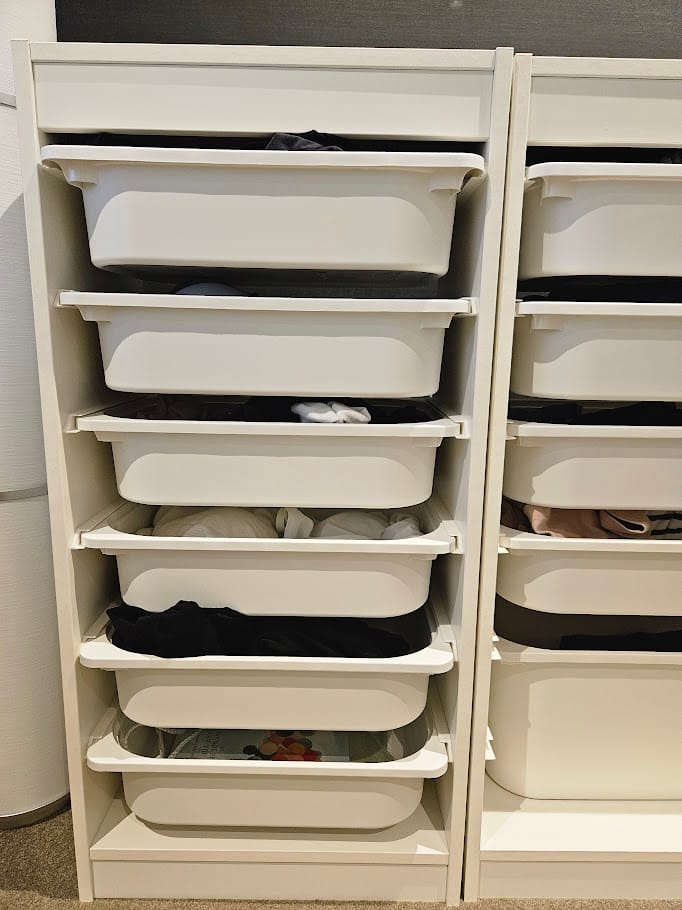
The practical limit here is volume. If you have more loungewear than fits comfortably in two or three bins, the drop-in system starts looking messy rather than intentional. That's actually useful feedback — it means you probably own too much loungewear.
Point 3: Hang Everything Else — Because Visible Wardrobes Make Better Decisions
Everything that isn't towels, underwear, or loungewear gets hung. Full stop.
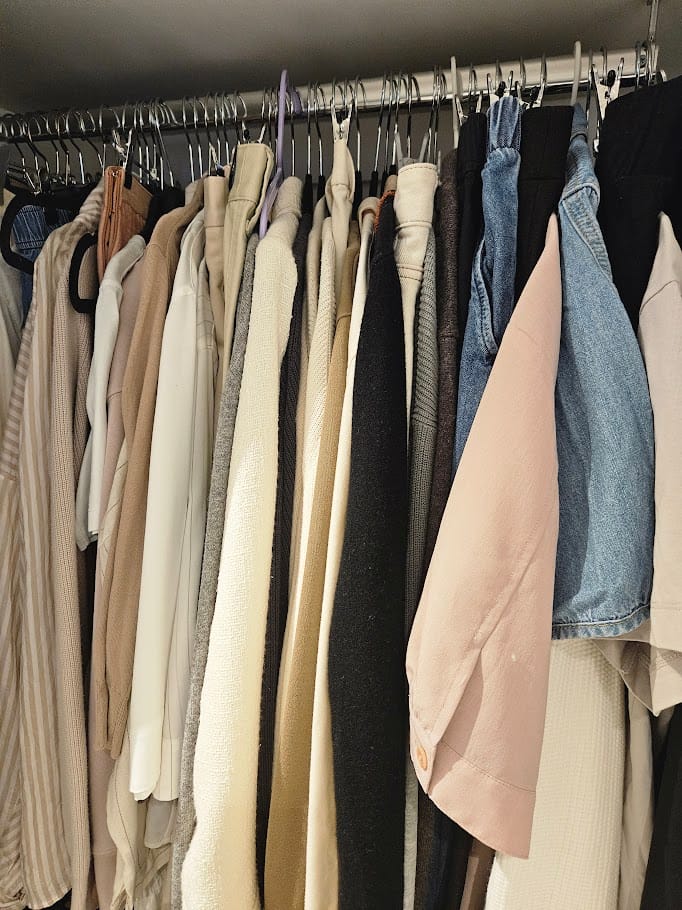
Shirts, pants, dresses, jackets, cardigans — all of it goes on hangers. This felt excessive at first. Then I noticed something: I stopped doing the "I have nothing to wear" spiral every morning. When your entire wardrobe is visible in a single sweep of the eye, decision fatigue essentially disappears. You can see exactly what you own, what coordinates with what, and what's been sitting untouched for months.
Hanging also eliminates most ironing. Items hung while still slightly warm from the dryer smooth out naturally. The only things I still iron are linen and formal wear, which is maybe twice a year.
I used to have separate sections for pants, jumpers, and skirts, but now I divide my clothes into two sections only: warm weather and cold weather. It massively reduces the time spent categorising!
I mainly use slim velvet hangers so the wardrobe doesn't expand. If you're switching from a shelf-fold system, there's an initial reorganisation afternoon involved. That's the real barrier. Once it's set up, maintenance is nearly zero.
Point 4: The 1-Year Audit — How Hanging Everything Keeps Your Wardrobe Honest
Here's the unexpected upside of a visible wardrobe: it audits itself.
Because everything is hanging, it's immediately obvious when something hasn't moved. If a jacket has been at the far left of the rail for 12 months without being touched, that's information. I do a single annual pass — usually in late autumn before the weather changes — and anything that hasn't been worn in over a year goes into a donation bag or gets offered to someone who'd actually use it.
This naturally caps the wardrobe. I can't keep buying things and hanging them because the rod has a physical limit. That constraint is intentional. Owning less means the system stays manageable, which means I never need to spend a weekend reorganising.
It's worth being honest: this audit requires a small tolerance for imperfection. There will always be items you're not sure about — the dress you wore once to a wedding, the jumper that might be useful someday. I give myself one "maybe" box per year. If I haven't gone back to retrieve something from it within a few months, it goes.
Conclusion: Minimalism Is Subtraction, Not Aesthetics
The version of simple living that gets photographed looks like a perfectly styled closet with identical baskets and a neutral colour palette. That's a aesthetic, not a philosophy.
Real simplicity is cutting the low-value work that quietly drains your time and mental energy week after week. Folding laundry was never a meaningful use of my evening. The baskets aren't Instagram-worthy. The Trofast bins look like toy storage because they are toy storage. None of it matters, because the outcome — reclaimed time, fewer decisions, no Sunday laundry dread — is what minimalism is actually for.
You don't need to do it perfectly. You just need to be honest about which parts of your routine are actually serving you and which ones you're doing because it's what you've always done.
That's the whole thing, really.